
A functional outdoor kitchen in Northeast Texas needs a well-planned cooking zone, durable weather-resistant materials, adequate counter and storage space, convenient utilities, proper lighting, ventilation, shade, and comfortable seating. The best designs also account for Texas heat, rain, fire safety, and traffic flow so homeowners can cook, serve, and entertain outdoors comfortably throughout much of the year.
At Firehouse Pools, we believe a great backyard should work as beautifully as it looks. An outdoor kitchen is most successful when it is designed as part of the entire outdoor living space, rather than treated as a collection of appliances added to a patio. Our team helps Northeast Texas homeowners coordinate pools, patios, outdoor kitchens, fire features, and gathering spaces into cohesive backyard environments. By considering how your family cooks, entertains, and moves through the space, Firehouse Pools can create an outdoor kitchen that feels like a natural extension of your home while standing up to the demands of the local climate.
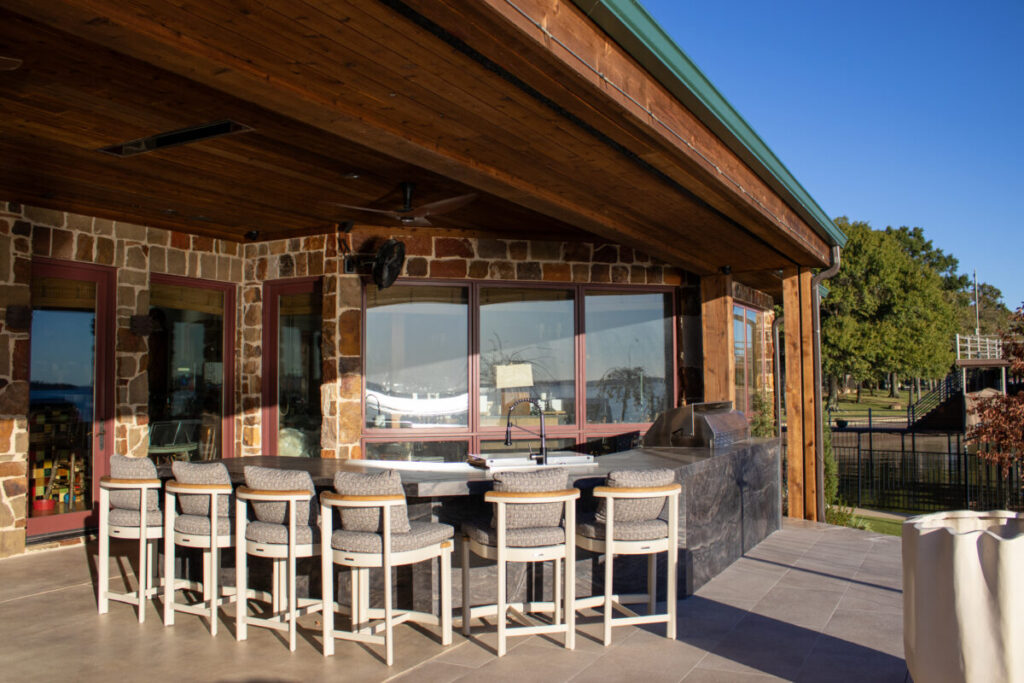
Essential Outdoor Kitchen Features for Northeast Texas Homes
The most useful outdoor kitchens combine cooking, preparation, storage, utilities, shelter, and entertainment in a layout that minimizes unnecessary trips indoors. Each element should be chosen according to how you actually plan to use the space.
What Cooking Appliances Does an Outdoor Kitchen Really Need?
Start with the appliances you will use regularly. For most homeowners, a quality built-in grill is the centerpiece, but the right outdoor cooking setup depends on your family’s habits.
Popular options include:
- Built-in gas or charcoal grill
- Smoker
- Griddle or flat-top cooking surface
- Outdoor refrigerator
- Side burners
- Pizza oven
- Ice maker or beverage cooler
More appliances are not necessarily better. A functional outdoor kitchen prioritizes frequently used equipment and leaves enough counter space around it for preparing and serving food.
Safety should influence appliance placement, too. The National Fire Protection Association recommends placing grills well away from homes, deck railings, eaves, and overhanging branches. NFPA research has also identified failure to clean, gas leaks or breaks, unattended cooking, and grills being too close to combustible materials as leading contributors to grill fires.
Always follow applicable local codes and the appliance manufacturer’s required clearances when planning a permanent installation.
How Much Counter and Storage Space Should You Include?
Outdoor kitchens need enough workspace to prepare food, set down hot dishes, serve meals, and keep frequently used supplies within reach. Counter space on both sides of primary cooking appliances can make everyday use significantly easier.
Think of the space in functional zones:
- Prep zone: Countertop, sink, utensils, and ingredients.
- Cooking zone: Grill, smoker, burners, or pizza oven.
- Serving zone: Open counter space where finished food can be plated or served.
- Cleanup zone: Sink, trash storage, and cleaning supplies.
- Cold-storage zone: Refrigerator, beverage cooler, or ice maker.
Weather-resistant drawers and cabinets can hold grilling tools, serving pieces, paper goods, and other supplies, reducing trips back into the house.
Choose exterior-rated cabinetry and durable countertop materials intended for outdoor conditions. Northeast Texas homeowners need surfaces capable of handling intense sunshine, temperature changes, moisture, and seasonal weather.
How Should an Outdoor Kitchen Be Designed for the Texas Climate?
Shade, airflow, weather protection, and durable materials are especially important for outdoor kitchens in Northeast Texas. Without them, a beautiful kitchen can become uncomfortable during the hottest part of the year.
North Texas has a humid subtropical climate characterized by hot summers, according to the National Weather Service. DFW’s 1991-2020 climate normals include an average of 20 days per year reaching 100°F, illustrating why heat management should be considered from the beginning of an outdoor living project.
A covered patio, pavilion, or other appropriately designed shade structure can make the kitchen more comfortable while helping protect certain surfaces and furnishings. Ceiling fans can improve airflow, while properly positioned lighting makes evening cooking and entertaining safer and easier.
Weather can also swing between wet periods and prolonged dry spells. That makes drainage, water-resistant finishes, and careful placement of electrical components important considerations. Outdoor-rated fixtures, appliances, and materials should be selected specifically for exterior use.
Where Should You Put an Outdoor Kitchen in Your Backyard?
The ideal outdoor kitchen location provides easy access to the house while keeping cooking smoke, heat, and foot traffic from interfering with relaxation areas. When a pool is part of the backyard, the kitchen should also connect naturally with poolside dining and entertaining areas.
Consider the path guests will take between:
- The house and outdoor kitchen
- The kitchen and dining table
- The pool and seating areas
- Cooking appliances and serving counters
- Refrigeration, storage, and cleanup areas
Avoid forcing guests to walk directly through the cook’s workspace to reach the pool, dining area, or house.
This is one reason coordinating the outdoor kitchen with the overall backyard design can be valuable. Instead of deciding where a grill should go after the pool and patio are finished, homeowners can plan cooking, dining, swimming, and conversation areas together.
Outdoor entertaining continues to influence residential design. The National Association of Home Builders notes that outdoor kitchen and patio combinations have become increasingly popular as entertaining spaces.
What Features Make an Outdoor Kitchen Better for Entertaining?
The best entertaining features keep the cook connected to family and guests. Rather than isolating the grill at the edge of the yard, consider creating a social space around the cooking area.
Useful additions may include:
- Bar-height seating
- Outdoor dining space
- Beverage refrigerator
- Integrated lighting
- Electrical outlets and charging locations
- Outdoor television or audio
- Ceiling fans
- Nearby fire features
- Covered or shaded seating
Lighting deserves particular attention when you want to cook under the stars. Use focused task lighting around grills and prep counters, then complement it with softer ambient lighting around dining, pathways, landscaping, and seating areas.
The goal is balance. Your cook should have enough light to safely prepare food without making the entire backyard feel overly bright.
Outdoor Kitchen FAQs
Does an outdoor kitchen need a sink?
A sink is not necessary for every outdoor kitchen, but it can make food preparation and cleanup considerably more convenient. Adding one requires appropriate plumbing, drainage, and winterization considerations.
Should an outdoor kitchen be covered?
Covering an outdoor kitchen can provide valuable shade and weather protection in Northeast Texas. The structure must be designed around cooking appliances with appropriate clearances and ventilation, so appliance specifications and applicable building and fire requirements should guide the design.
Can you build an outdoor kitchen next to a swimming pool?
Yes. An outdoor kitchen can complement a swimming pool especially well when cooking, dining, seating, and pool traffic are planned together. Position the kitchen so wet swimmers do not have to pass through the primary cooking zone.
What materials are best for an outdoor kitchen in Texas?
Choose exterior-rated materials that resist moisture, UV exposure, heat, and temperature changes. Depending on the design, options can include masonry, stone, stainless steel cabinetry, porcelain surfaces, and countertops specifically suited to outdoor installation.
Create an Outdoor Kitchen Designed Around Your Backyard
An outdoor kitchen should do more than give your grill a permanent home. With thoughtful cooking zones, generous workspace, durable materials, shade, lighting, storage, and comfortable gathering areas, it can become one of the most useful spaces in your Northeast Texas backyard.
Firehouse Pools can help you coordinate your outdoor kitchen with your pool, patio, fire features, and total backyard design, creating a space made for everything from relaxed family dinners to evenings cooking under the stars.
Ready to create a functional outdoor kitchen and complete backyard retreat? Contact Firehouse Pools today to start planning your outdoor living space.